
It has become a tradition: on the day before the German Brand Summit (Deutscher Marken-Summit), the awards for outstanding communication are presented.
Organised by the F.A.Z. Institute, the guest list included Lufthansa CEO Carsten Spohr and the previous year’s winner, Deutsche Post CEO Dr Frank Appel.
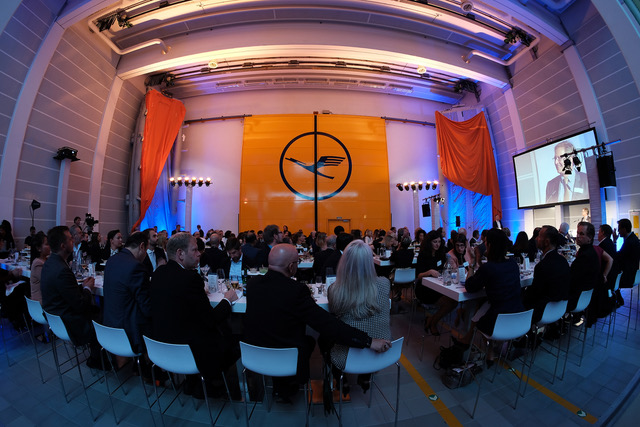
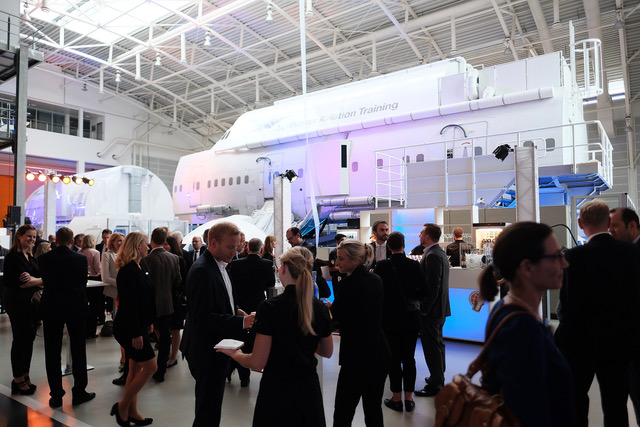
The celebration took place at the impressive Lufthansa Aviation Center in Frankfurt, which is equipped for training purposes with replicas of the A380, cockpit simulators and even water slides.
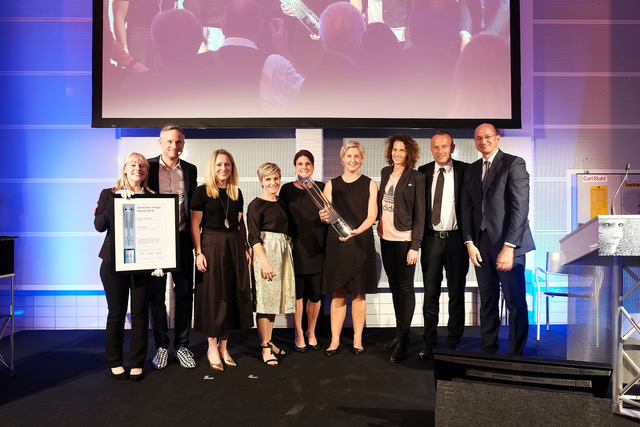
Besides performing as the iPad magician, I also had the pleasure of hosting the awards ceremony, conducting many interesting interviews and, at the end, presenting the award to the adidas communications team.
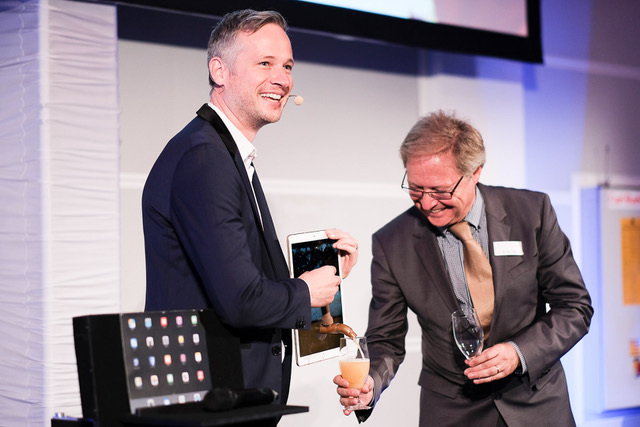
I was also interviewed myself during the event – by Christian Preiser, editor-in-chief of the business magazine “Markt und Mittelstand”, which covers Germany’s mid-sized companies.
With his kind permission, I can publish the interview here as well.
Germany is considered the home of the “economic miracle”. How magical is Germany’s Mittelstand?
Well, I wasn’t born at the time of the economic miracle, and I’m far from comparing magic with the epoch-making achievements of post-war Germany. But what I think the economic miracle and stage magic have in common is the conviction that a good idea is only worth something if you put it into practice. That applies to us magicians just as much as to the Mittelstand. So I would venture to say: Germany’s Mittelstand is magical because it keeps generating unexpected ideas, enchanting its customers and astonishing the market!
As a magician you are self-employed – and therefore an entrepreneur. What matters more: commercial profit or artistic creativity?
The wonderful thing is that both are possible. I don’t experience profitability and creativity as a contradiction or a conflict of goals. If anything, profit allows me to live out my artistic creativity. I see that as a great privilege. I want to entertain, astonish and enchant people.
What can mid-sized business owners learn from magicians – and vice versa?
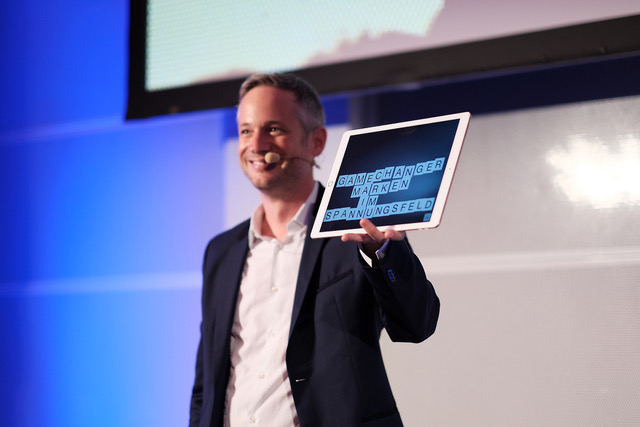
As a keynote speaker at corporate conferences, I explain how to make use of the changes brought about by digital transformation, illustrating this with my own success story. But I don’t do so with a wagging finger, because there isn’t just one right way. Conversely, I take inspiration from success stories – especially those of mid-sized companies and Germany’s many hidden champions. When I perform at corporate events, I prepare intensively by learning about the company’s history, products and culture. I find getting to know the recipes for success of other industries enriching. I think everyone can learn something from someone else’s story if they stay open to it.
Your tablet magic plays with the audience’s experiences and expectations – that sounds like something from a marketing textbook.
I treat my audience very sincerely and try to fool them in a charming way – not because I want to obscure something, but because I want to invite them to change their perspective. The magician Karl Germain put it in a nutshell more than 100 years ago: “Magic is the only honest profession. A magician promises to deceive you and he does.” Incidentally, I don’t consider the marketing principles of businesses to be negative. In my view, only those companies that know and fulfil the needs and wishes of their customers are successful in the long run. If companies aren’t sincere about it, it is exhausting at the very least and leads to failure in the long term.
You are one of the first magicians to perform with tablets and smartphones. Would you have had a career as a magician without digitalisation?
Yes, I believe so, although on a different scale. Before I became successful as a digital magician with TV screens, projections and later tablets, I had already spent years as the magical decoy on the German hidden-camera show “Verstehen Sie Spaß?”. This TV experience helped me recognise and seize the opportunities of digitalisation early on. I learned to prove myself as a pioneer in my field and to reach an audience of millions via platforms such as YouTube.
How tech-savvy and innovative does a magician have to be?
To offer something inexplicable and to astonish, a good magician always has to be one crucial moment ahead of the audience. That’s why we use the latest and most modern technologies. Robert-Houdin, regarded as the father of modern magic, was not only a magician but also a highly successful inventor. The boundaries between his patents and his stage shows, between illusion and innovation, were fluid. Just like a good product developer, we magicians keep asking ourselves: what doesn’t exist yet? What would surprise and delight our audience – in other words, our customers? This process must never stand still.
What drives you to invent new tricks: the sheer joy of play or the rational consideration that only innovation secures your success as a magician?
It starts with the appeal and the joy of creativity. If you looked at commercial applications at this stage, many ideas would never come into being. A passion for the unthinkable and an often childlike joy of play are the basic ingredients of an extraordinary illusion. In a second step, you think about the impact on the audience and the chances of success – because, of course, applause, likes and clicks are the digital artist’s bread and butter. In this context, my team and I also consider which channel each piece is best suited for: a one-off YouTube clip, a TV special or a regular stage performance.
What is your flop rate?
What my audience gets to see is only the tip of the creative iceberg. The price you pay as an innovator is countless drafts and ideas that can’t be realised for all sorts of reasons. That can be frustrating and expensive, too, but as in any company, it’s simply part of the process. We use YouTube as a test platform to present a new idea and find out, through interaction with viewers, how much potential a new trick has.
How do you protect yourself against idea theft: can magic tricks be patented?
Unfortunately, that’s almost impossible. The bureaucratic process takes too long, and the protection it offers is easy to get around. In the age of YouTube, not only viewers but also other magicians can watch a performance as often as they like, even frame by frame. This tempts some to disregard magicians’ ethics and copy my method. The only remedy against plagiarism: stay innovative and always be one step ahead.
How much of your magic is inspiration – and how much perspiration?
As our inventions as magicians are usually neither subject to EU market approval procedures nor threatened by Trump’s punitive tariffs, I would put the perspiration rate at 80 per cent. Add 10 per cent communication, because that is more important than ever today, and 20 per cent inspiration. That brings me to the famous 110 per cent you need to stay successful.
Besides talent, how important are hard work, discipline and practice in your profession?
Absolutely essential. In that respect, a mid-sized magician like me is no different from Germany’s Mittelstand. Magic is a craft in which these virtues are the necessary, though not always sufficient, conditions for success. In the end, my customers – my audience – decide whether I can delight them or not. In return, I receive something that, sadly, is far too rare in many other jobs: applause and immediate recognition. Why doesn’t an enthusiastic boss stand at the exit in the evening and give their employees a round of applause for once?!
Do you prefer performing for large corporations or for mid-sized companies?
You can’t generalise. There are nice people everywhere. The particular appeal of the Mittelstand lies in its often very distinctive corporate culture, a frequently family-like atmosphere and a palpable pride in the shared success story. In my experience, mid-sized companies have a very pronounced “corporate personality”. Each of them is pretty unique.
You studied industrial engineering. Does your business and technical knowledge help you as a magician?
I studied economics with a focus on computer science at what is now the Karlsruhe Institute of Technology (KIT). That undoubtedly gave me interesting insights and foundations that I was later able to combine with my passion – especially when developing technically demanding tricks. Even more relevant, though, are the contacts I made back then. I’m still in regular contact with some of the professors at KIT and get valuable ideas from them.
The market for magicians is characterised by overcapacity. How do you position yourself – through your “product”, your “price” or something else?
I firmly believe that quality wins in the end and that carefully building a brand pays off. This formula for success may not sound terribly magical. But even in our industry, nobody has ever achieved lasting success just by performing magic and hoping for a miracle. Person, product, passion: in the end, it’s the overall package that delights the audience – or doesn’t.
How international is the “Simon Pierro” brand?
As the “iPad magician”, I want and need to position myself internationally. And I really enjoy it: travelling to distant and unfamiliar countries has always been my passion and my longing. In 2015, I wanted to conquer the American market, so I deliberately planned an appearance on a major TV show. I succeeded with The Ellen DeGeneres Show, at the time America’s most popular daytime talk show. The video of my appearance generated more than twenty million views on YouTube alone. Gaining a foothold as an artist in America was extremely important for the internationalisation of the “Simon Pierro” brand.
Typical of the Mittelstand is the question of succession. You turn 40 this year. Are you already thinking about retirement?
Anyone who does their job with passion doesn’t long for retirement at 40. Still, I know: it’s precisely when you are at your most successful that you should change. But I haven’t reached that point yet. I am still ambitious to become even more successful.
You need to load content from reCAPTCHA to submit the form. Please note that doing so will share data with third-party providers.
More Information